These Private Chefs Don’t Just Cook — They Tell Stories Through Your Senses
In private cheffing, the most powerful stories aren’t told on menus or websites — they’re felt in the room, experienced through the senses. As chefs move closer to the diner — cooking in home kitchens, chatting across counters, and plating right in front of guests — storytelling becomes less about words and more about presence.
From sight to sound, smell to touch, here’s how private chefs on yhangry are turning sensory storytelling into their secret ingredient.
Sight: Plating That Stops the Room
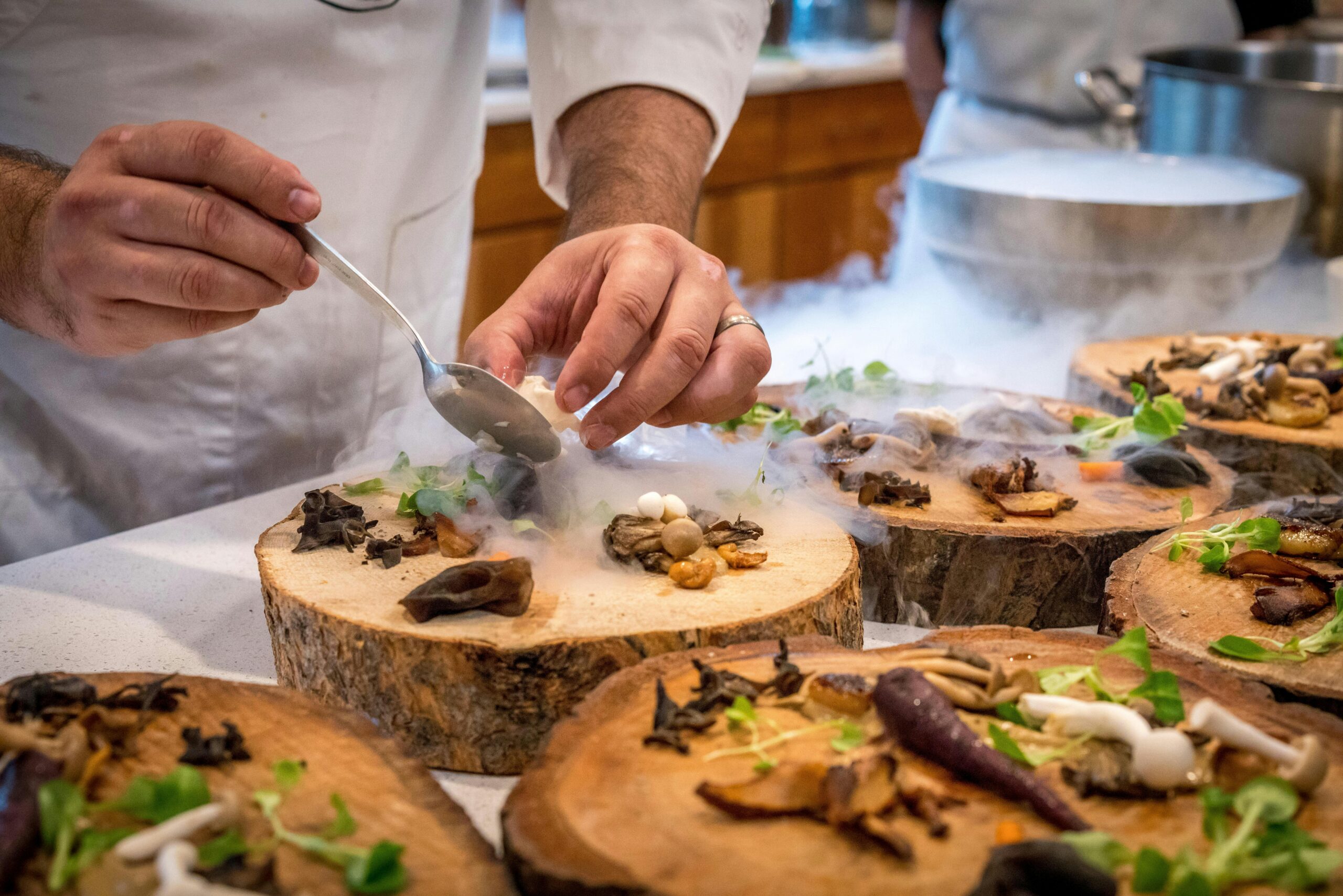
The visual language of food has evolved far beyond the traditional meat-and-two-veg. Today, plating is a narrative device — creating anticipation, drama, and beauty before the first bite.
Specialising in small plates and finger foods, Chef Alexander designs his menus with intimacy and elegance in mind. Whether it’s a canapé for a corporate cocktail party or a sculptural amuse-bouche at a wedding, his modern plating techniques ensure that guests don’t just eat — they experience.
“There’s a gasp and a silence of photo taking. Many often joke that the food simply looks too good to eat, but of course seeing food is only the pre-experience. No other art form, music or visual arts, can be pre-experienced.”
This kind of visual storytelling has become central to the private dining experience. Guests want to be wowed, but more than that — they want to feel something before the meal begins.
Hearing: The Emotional Undercurrent of a Meal
Private dining gives chefs the rare opportunity to hear the impact of their food in real time — through laughter, storytelling, even tears. And increasingly, chefs are using sound as part of their storytelling toolkit.
When planning a private dinner, Chef Cedric starts not with a knife, but with a conversation. He gets to know the guests, listens to their mood, and adapts the experience to the emotional energy in the room.
“I start by asking how my customers are doing and about their day, and from there, the conversation flows. That hugely helps set the tone to an unforgettable experience.”
One of his most memorable moments involved a dish called deep-fried crispy rice & peas, which unlocked a powerful childhood memory for two guests:
“They screamed, ‘Oh my days! This reminds me of my childhood when we used to live with mum, and she would cook rice & peas every Sunday. Now you’ve pretty much recreated that exact same dish but in one bite,’” Cedric recalls.
Smell: A Story That Begins Before the First Bite
Aromas carry stories. They signal comfort, heritage, curiosity — long before the dish reaches the table.
Rather than serving familiar restaurant staples like chicken tikka masala, Chef Meera uses her private dining events at yhangry to take guests beyond the expected. Cooking in clients’ homes allows her to layer her flavours in real time and create an immersive experience through scent.
“It’s immersive — from the aromas to the textures and presentation. It sparks conversation too. For example, I bring in a special chilli called Bardic Chilli from a village in Karnataka — it has a beautiful flavour and colour — and some guests are genuinely curious to learn about it. That level of interaction and the ability to share stories behind the ingredients is something you can’t really replicate in a restaurant setting.”
For chefs like Meera, scent isn’t just seasoning — it’s storytelling. The aroma of toasting spices, the sizzle of ghee, the warmth in the air — it all builds anticipation and deepens the sense of connection.
Taste: When Flavour Feels Like Emotion
Taste is the culmination of every choice a chef makes — the most direct way to communicate memory, culture, and care. But in private dining, delivering great flavour isn’t about perfection — it’s about resonance.
For Chef Ben, every event is an exercise in adaptability.
“Each event is a new layout, new equipment. I always bring my own pots, pans, induction burners — whatever it takes to get it right.”
But it’s not just about logistics. It’s about presence. Being fully tuned into the moment — to the space, the energy, and the meaning behind each course.
“One guest was brought to tears by a simple rice dish with slow-braised chicken. She said it felt like a big hug. That’s when I knew I was doing the right kind of work.”
Ben’s approach is both instinctive and refined by experience. This is where taste transforms into storytelling — where a well-seasoned dish becomes a memory made manifest.
Whether you're hosting a special celebration dinner, looking for a chef during your holiday or weekly meal prep, we will match you to the perfect chefs.
Start hereTouch: Letting Guests Into the Experience
Touch is perhaps the most intimate of the senses — and in private cheffing, it often marks the difference between a meal and a memory. It’s one thing to be served dinner. It’s another to shape the dumpling yourself.
That’s where Chef Mike comes in. Through his interactive cooking classes, guests don’t just eat — they take part in the creation.
In one session, the children were invited to get hands-on, crafting their own gyoza from scratch. The result? A moment of pride and joy for the whole family.
“Excellent menu. Delicious food! The kids even made their own gyoza!” — client Vanita
These tactile moments make the experience unforgettable. Whether it’s rolling, folding, garnishing, or plating — letting guests touch their food transforms them from spectators into participants.
Final Course
For private chefs, storytelling doesn’t come through a single medium — it comes alive through all five senses. The best experiences aren’t scripted — they’re lived. And by tuning into sight, sound, smell, taste, and touch, private chefs create something that lingers long after the last course: connection.
- How do private chefs incorporate storytelling into their cooking?
-
Private chefs use storytelling to create memorable dining experiences by engaging all five senses—sight, sound, smell, taste, and touch—through carefully crafted dishes and presentations. This approach makes each meal more personal and immersive for the guests.
- Why is plating so important for a private chef’s storytelling?
-
Plating engages the sense of sight, making the meal not just food but an art form. A beautifully plated dish can evoke emotions, spark conversation, and enhance the entire dining experience.
- How do private chefs use storytelling to engage their guests?
-
Private chefs use storytelling to create a deeper emotional connection with their guests by sharing the stories behind the dishes, ingredients, and experiences. This turns a simple meal into an unforgettable moment.
- How can private chefs use storytelling to build their brand?
-
By incorporating sensory storytelling, private chefs can differentiate themselves in the market. Sharing their culinary journey, unique cooking methods, and personal experiences helps them build a brand that resonates with clients.
- What makes private chef experiences different from restaurant dining?
-
Private chef experiences are tailored to individual guests, offering bespoke menus, personalized service, and the opportunity to connect with the chef through storytelling, making it far more intimate than traditional dining.
- How does a private chef use sound to set the atmosphere?
-
Sound can set the atmosphere through elements like sizzling food, clinking glasses, or background music. These auditory cues create a dynamic and memorable experience, further enhancing the sensory journey of the meal.