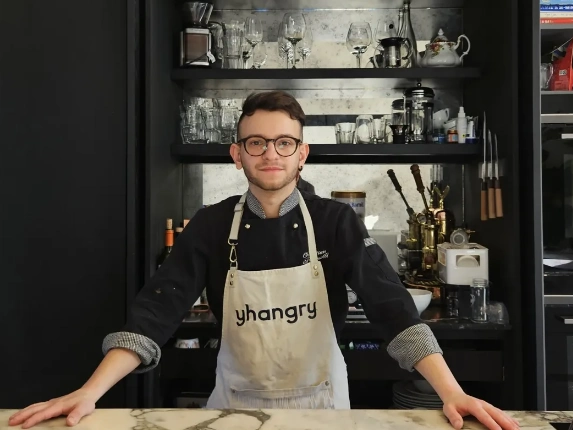
How Yhangry Chef Sukhdev Brought Fine Dining to 80+ Homes

From Restaurant Plates to Real Homes
Born and raised in Manchester, Chef Sukhdev trained at Michael Caines’ ABode, where precision and presentation were the norm. “I’ve done this so long, I don’t have a signature dish—I just cook properly.”
When he moved into private dining, it wasn’t the cooking that changed—it was the environment. He swapped fully equipped professional kitchens for home spaces with varying layouts, tools, and appliances.
His early bookings were eye-opening. “There was no rush. I could actually speak to people, explain the dish, and take my time.” But one moment stood out: a client’s kitchen had induction hobs, but all his pans were gas-compatible. “I had two of her pans for nine guests. I was rolling around like an idiot.”
It was a lesson in preparation—and one he took seriously.
Adaptability Is the New Skill Set
Sukhdev now treats every booking like a performance. He always requests kitchen photos or videos ahead of time, checks the oven type, and confirms what utensils are available. His go-to kit includes:
- A complete set of pots and pans
- Cleaning supplies
- Extra portions of food, just in case
“You have to improvise. You can’t stop and complain—you just get on with it.” He’s baked, fried, and finished dishes across multiple ovens when needed. Every job is different—and he’s ready for that.
Equally important is client interaction. “In a restaurant, you don’t talk to customers. At someone’s house, it’s like a chef’s table. You have to present yourself. You have to talk. That’s what makes people come back.”
Knowing Your Worth—and Protecting It
After 18 years in kitchens, Sukhdev doesn’t mince words when it comes to pricing. “I’m not going to someone’s house for three or four hours plus ingredients—for £100. If you want me, you book me at my price.”
He warns new chefs against undervaluing their time just to win bookings. “If chefs keep lowering prices, customers start thinking they can do it better themselves. That’s not good for any of us.”
His message is clear: charge what your skill is worth, and make sure your abilities match the price. “It’s easy to call yourself a chef. But you have to be able to do the job, properly, in any kitchen.”
Behind the Scenes, Yhangry Keeps Things Running
For the past three and a half years, Sukhdev has used Yhangry to manage the logistics behind his bookings. “yhangry is like our PA. They do the admin, the advertising, etc.—we just go and cook.”
The time saved on outreach and scheduling lets him focus on food and execution.
Advice for Chefs Making the Leap
Whether you're hosting a special celebration dinner, looking for a chef during your holiday or weekly meal prep, we will match you to the perfect chefs.
Start hereFor Sukhdev, the move into private dining meant becoming adaptable, client-facing, and always ready for the unexpected. He offers clear advice for chefs wanting to make the same leap:
- Set proper rates, and stick to them
- Plan for every type of kitchen
- Treat each booking as both service and performance
He prefers smaller, more personal dinners—especially for couples. “You can go a bit overboard on detail without worrying about service time.” But whatever the setup, the standard never drops.
“You don’t need a water bath or a huge kitchen,” he says. “You just need to know what you’re doing.”
- How do I ensure food safety and hygiene in a client's kitchen?
-
Begin by conducting a thorough assessment of the client’s kitchen, checking for cleanliness, adequate refrigeration, and proper sanitation facilities. Bring your own sanitised tools, cutting boards, and cleaning supplies to maintain control over hygiene standards. Implement strict personal hygiene practices, such as frequent handwashing and using gloves when necessary, to prevent cross-contamination.
- What are the best practices for transporting ingredients and equipment to a client's home?
-
Use insulated coolers and thermal bags to maintain appropriate temperatures for perishable items during transit. Securely pack equipment using padded containers to prevent damage. Create a detailed checklist to ensure all necessary items are packed, reducing the risk of forgetting essential tools or ingredients.
- How can a chef effectively manage timing for multi-course meals in a private setting?
-
Effective time management involves detailed planning and preparation. Chefs should create a timeline for each course, considering cooking and plating times, and coordinate with any assisting staff. Flexibility is important to accommodate the pace of the guests, ensuring each course is served at the optimal moment.
- What strategies can I use to manage time effectively during in-home service?
-
Develop a detailed timeline for the event, allocating specific time blocks for preparation, cooking, plating, and service. Prepare mise en place as much as possible before arriving at the client’s home. Communicate with the client about the schedule to ensure alignment and minimise unexpected interruptions.